Product Description
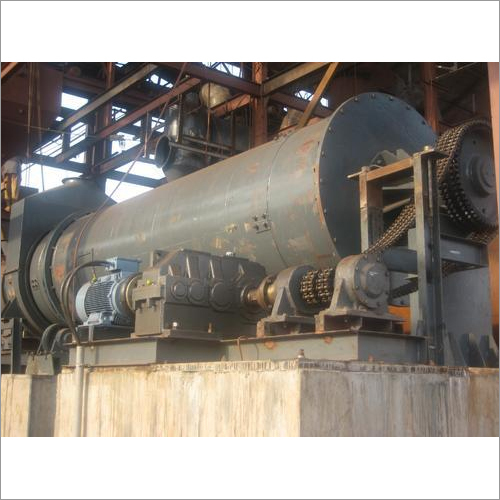
Double Shell Rotary Dryer provided by our company, is designed and manufactured by making use of premium grade of raw materials and upgraded techniques. This drier is a horizontal cylindrical jacketed shell with hollow agitator, rotating in close clearance. This drier offers a simple but effective method of drying wet cakes and sometimes slurries. Double Shell Rotary Dryer has many applications but are most commonly seen in the mineral industry for drying sands, sewage sludge, etc.
Our Double Shell Rotary Dryers deliver high-efficiency drying for mineral, sand, chemical, and biomass applications. Designed with customizable capacities (3-30 TPH), double shell technology, and a robust build, they ensure consistent results in demanding environments. With horizontal installation and flexible controls, the dryers adapt seamlessly to various processing needs.
Engineered for Durability and PerformanceFeaturing 8-16 mm shell thickness, anti-corrosive surface finish, and operation at up to 1200C, these dryers guarantee long service life. The advanced control system provides both automatic and semi-automatic operation, allowing precise process management and reduced manual intervention.
Flexible Heating and Custom DesignThe dryers can use direct or indirect heat sourced from coal, gas, oil, or bio-fuel, giving you flexibility over fuel choices and operating costs. Dimensions and material options (mild steel or stainless steel) are customizable, while power usage varies according to the selected capacity and application.
FAQ's of Double Shell Rotary Dryers:
Q: How does the double shell design improve drying efficiency in rotary dryers?
A: The double shell design enhances heat transfer by providing better insulation and more uniform heat distribution, which leads to more consistent drying. It also reduces heat loss and improves energy efficiency compared to single shell models.
Q: What types of materials can be dried using this rotary dryer?
A: This dryer is suitable for a wide range of materials including minerals, sand, chemicals, and biomass. Its robust construction and customizable settings allow it to handle varying moisture levels and particle sizes effectively.
Q: When should I choose direct versus indirect heating for the drying process?
A: Direct heating is ideal when the material can withstand direct contact with hot gases, offering faster drying times. Indirect heating is recommended for heat-sensitive materials or when contamination from combustion gases must be avoided.
Q: Where can this rotary dryer be installed in an industrial facility?
A: The unit's horizontal configuration allows installation as a standalone system or integration into existing production lines. Customizable dimensions ensure adaptability to different plant layouts and space requirements.
Q: What is the process for controlling and monitoring the dryer's operation?
A: Our dryers feature automatic or semi-automatic control systems that enable real-time monitoring of drum speed, temperature, and moisture levels. This allows operators to optimize drying performance and ensure product consistency.
Q: How does using different fuel types benefit my operation?
A: The ability to choose among coal, gas, oil, or bio-fuels provides cost flexibility and allows the dryer to adapt to fuel availability or environmental regulations. This feature can help lower operational costs and support sustainable practices.





 Send Inquiry
 Send Inquiry
 Send SMS